
Reading is one of Berkshire’s best-known towns, combining a busy commercial centre with established residential neighbourhoods, major business parks and a long history.
From Reading Station and the Abbey Quarter to Caversham, Tilehurst and Green Park, different parts of Reading have their own character and purpose. The town is also divided across several RG postcode districts, which is why it is useful to understand how the main areas fit together.
Whether you live locally, run a business in Reading or are simply getting to know the area, this guide looks at some of the best-known landmarks, neighbourhoods and postcodes around the town.
Where is Reading and what is the area known for?
Reading is a large town in Berkshire in South East England. Its position between London and the wider Thames Valley has helped it develop into an important centre for business, retail, education and transport.
The town centre is home to shops, offices, restaurants and entertainment venues, while Reading Station provides rail connections to London and destinations across the UK.
Beyond the centre, Reading includes a mixture of residential communities, green spaces and commercial districts. Caversham sits north of the River Thames, Tilehurst lies to the west, while areas such as Earley and Woodley sit towards the eastern side of the wider Reading area.
Reading is also home to major employment centres including Green Park and Thames Valley Park, giving the town a particularly strong business presence.
What are some of the best-known landmarks in Reading?
Reading has a number of landmarks that reflect both its history and its development as a modern commercial town.
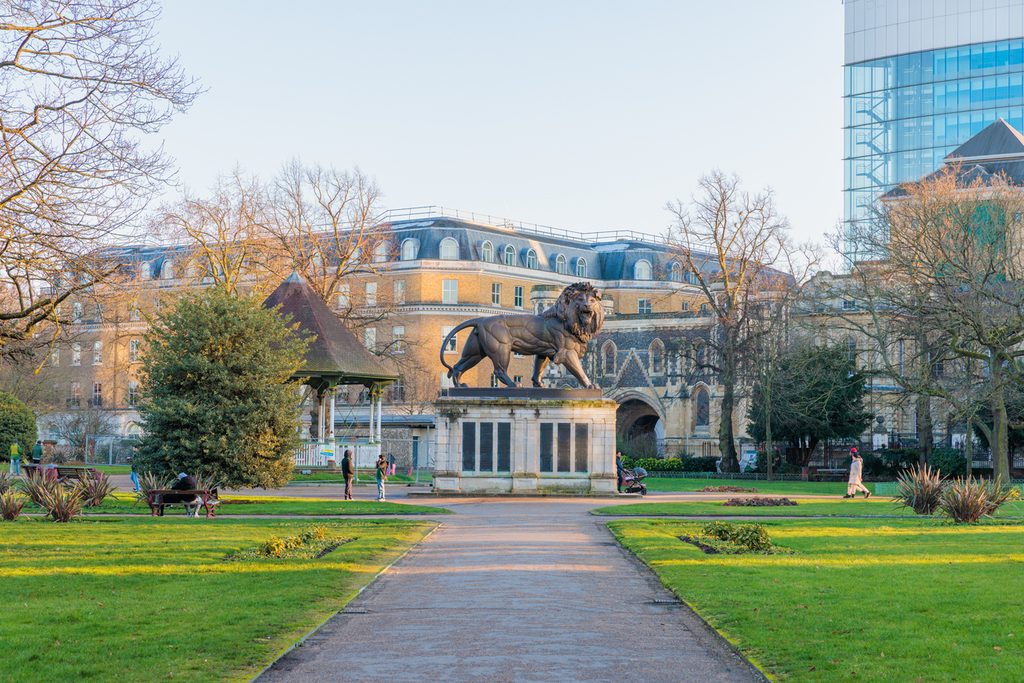
Forbury Gardens and the Maiwand Lion
Forbury Gardens is one of Reading town centre’s best-known green spaces. Originally associated with Reading Abbey, the gardens became a public park during the Victorian period.
One of its most recognisable features is the Maiwand Lion, a large bronze sculpture commemorating soldiers who died during the Battle of Maiwand in 1880.
Its central location makes Forbury Gardens an easy landmark for visitors exploring Reading town centre.
Reading Abbey Ruins
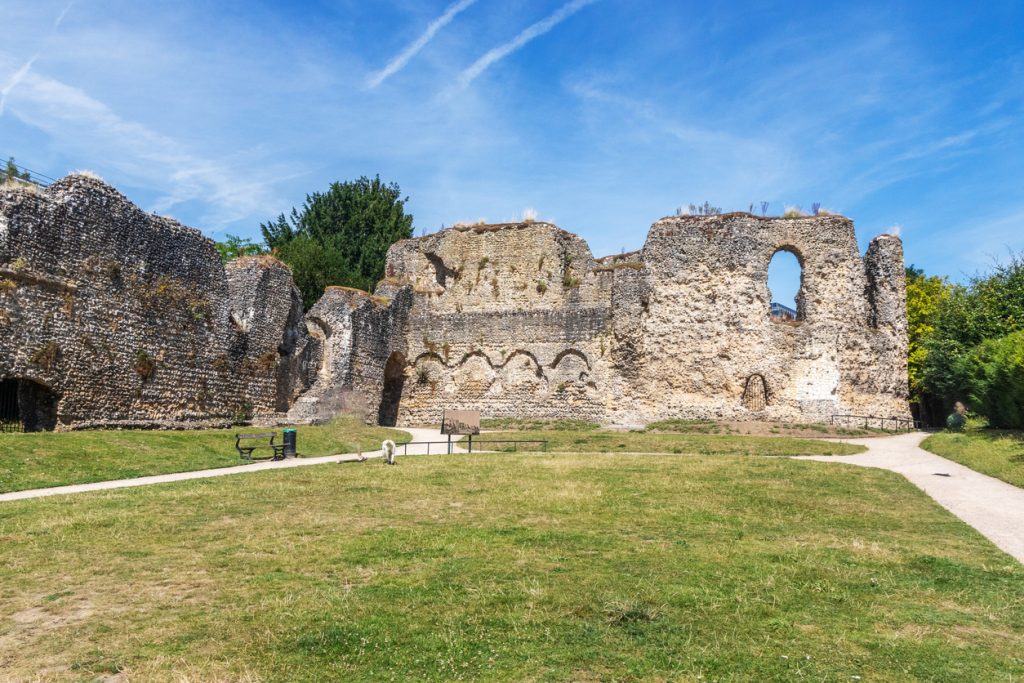
Close to Forbury Gardens are the remains of Reading Abbey.
Founded in the 12th century, the abbey was once one of England’s major religious centres and was also the burial place of King Henry I. Today, the ruins form an important part of Reading’s Abbey Quarter and offer a visible connection with the town’s medieval history.
The surrounding Abbey Quarter also includes Reading Museum and other historic buildings.
Reading Station
The local station in Reading is one of the most recognisable modern landmarks in the town.
Located close to the centre, it provides important rail connections and acts as a gateway for commuters, visitors and businesses. The streets surrounding the station contain a mixture of offices, shops, restaurants and other commercial premises.
Its location also makes it a useful reference point when describing central Reading.
Prospect Park
To the west of Reading town centre, Prospect Park is one of the town’s largest public green spaces.
The park provides open space for walking, recreation and community activities and is surrounded by residential parts of west Reading. It also serves as a useful landmark between central Reading and neighbourhoods further west.
What are the main areas of Reading?
Reading covers a number of distinct areas, each with its own mix of homes, businesses and local facilities.
Reading town centre
The town centre is the main commercial heart of the area.
It includes Broad Street, The Oracle shopping centre, Reading Station and a large concentration of offices, shops, hospitality businesses and professional services.
As a result, it is one of the busiest parts of Reading for both residents and visitors.
Caversham
Caversham lies to the north of central Reading, across the River Thames.
The area has its own shopping streets, restaurants and local businesses while remaining within easy reach of the town centre. Caversham also includes a number of residential neighbourhoods extending further north.
Tilehurst
Tilehurst is a large residential area to the west of Reading.
It has its own shops, schools and community facilities and connects Reading with neighbouring parts of West Berkshire.
Earley
Earley lies to the east and south-east of central Reading.
The area is predominantly residential but also benefits from its proximity to the University of Reading, local employment areas and major routes into the town.
Whitley
Whitley is situated in south Reading and includes a mixture of residential neighbourhoods, community facilities and businesses.
Its location provides easy access to other parts of south Reading as well as major roads around the town.
Green Park
Green Park is one of Reading’s major business districts.
Located south of the town centre, it is home to offices and organisations from a range of industries. Its proximity to major road connections has helped make it an important employment area within Reading.
Thames Valley Park
Thames Valley Park lies to the east of central Reading close to the River Thames.
It is another significant business area and is particularly associated with large office developments and technology companies.
Which postcodes cover Reading?
Reading and its surrounding communities are covered by the RG postcode area, with different postcode districts representing different parts of the town.
Some of the main Reading postcode districts include:
- RG1 – central Reading and areas immediately surrounding the town centre
- RG2 – much of south Reading
- RG4 – Caversham and areas north of the town centre
- RG6 – parts of east Reading and the Earley area
- RG30 – areas of west Reading
- RG31 – Tilehurst and surrounding areas
Postcodes do not always follow neighbourhood boundaries exactly, so individual districts can include several communities. They are still a useful way of understanding the broad geography of Reading, particularly when arranging deliveries, planning local services or identifying business locations.
Where are Reading’s main business areas?
Reading’s business community is spread across several parts of the town rather than being concentrated in one place.
The town centre contains a large number of offices, retailers, restaurants and professional service businesses. The area around Reading Station is particularly important because of its transport connections.
Green Park and Thames Valley Park provide larger office environments, while smaller businesses can be found throughout Caversham, Tilehurst, Earley and other neighbourhoods.
Reading is also home to schools, charities, community organisations and the University of Reading, creating demand for a wide range of local services.
This mix of large employers, independent businesses and community organisations is one of the reasons Reading has developed such a varied commercial character.
How do Reading businesses use printed materials?
Printed materials remain useful for businesses and organisations across Reading.
Retail businesses may use posters, signage and promotional materials, while professional firms often require business cards, brochures and branded stationery. Events and exhibitions can require roller banners, display graphics, booklets and other larger-format materials.
Schools, charities and community organisations may also need flyers, programmes, posters and information packs.
The right type of print depends on how the material will be used, the quantity required, the available artwork and the finish needed. Choosing suitable paper, size and production methods can make a noticeable difference to the finished result.
Need professional printing services in Reading?
Ostrich Print supports businesses, organisations and individuals across Reading and the wider Berkshire area with business cards, brochures, flyers, booklets, signage, large-format print and more.
For more information about the services available, visit our professional printing services in Reading page or speak to the team about your next print project.